

Bathroom safety is one of the most critical aspects of maintaining independence and preventing falls at home. Whether you are navigating temporary fatigue, recovering from surgery, or proactively setting up your space for long-term accessibility, small modifications can make a profound difference.
Here are four practical bathroom safety tips straight from occupational therapy practice to keep your routine safe and smooth.
1. Elevated Toilet Seats
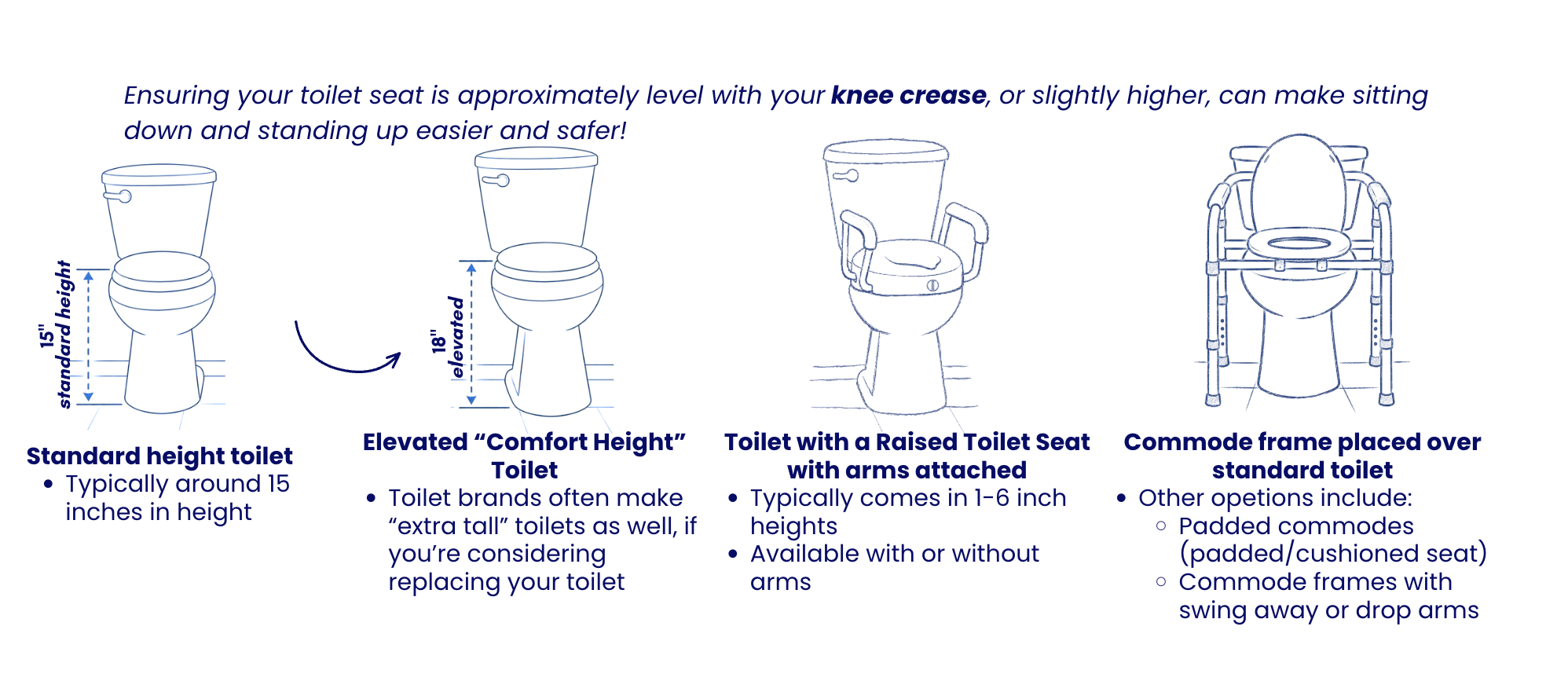
Bending and rising from a standard low toilet (typically around 15 inches) can place significant strain on your knees, hips, and core.
Target Height: Ensuring your toilet seat is approximately level with your knee crease, or slightly higher, makes sitting down and standing up significantly easier and safer.
Options to Consider: You can look into elevated "comfort height" toilets (around 18 inches) if you are remodeling, attach a 1-to-6-inch raised toilet seat (available with or without arms), or use a sturdy commode frame placed directly over your standard toilet.
2. Shower Chairs and Tub Benches
Standing for the duration of a shower requires high levels of balance and static endurance. Bringing a seat into the bath or shower allows you to conserve vital energy and lower fall risks.
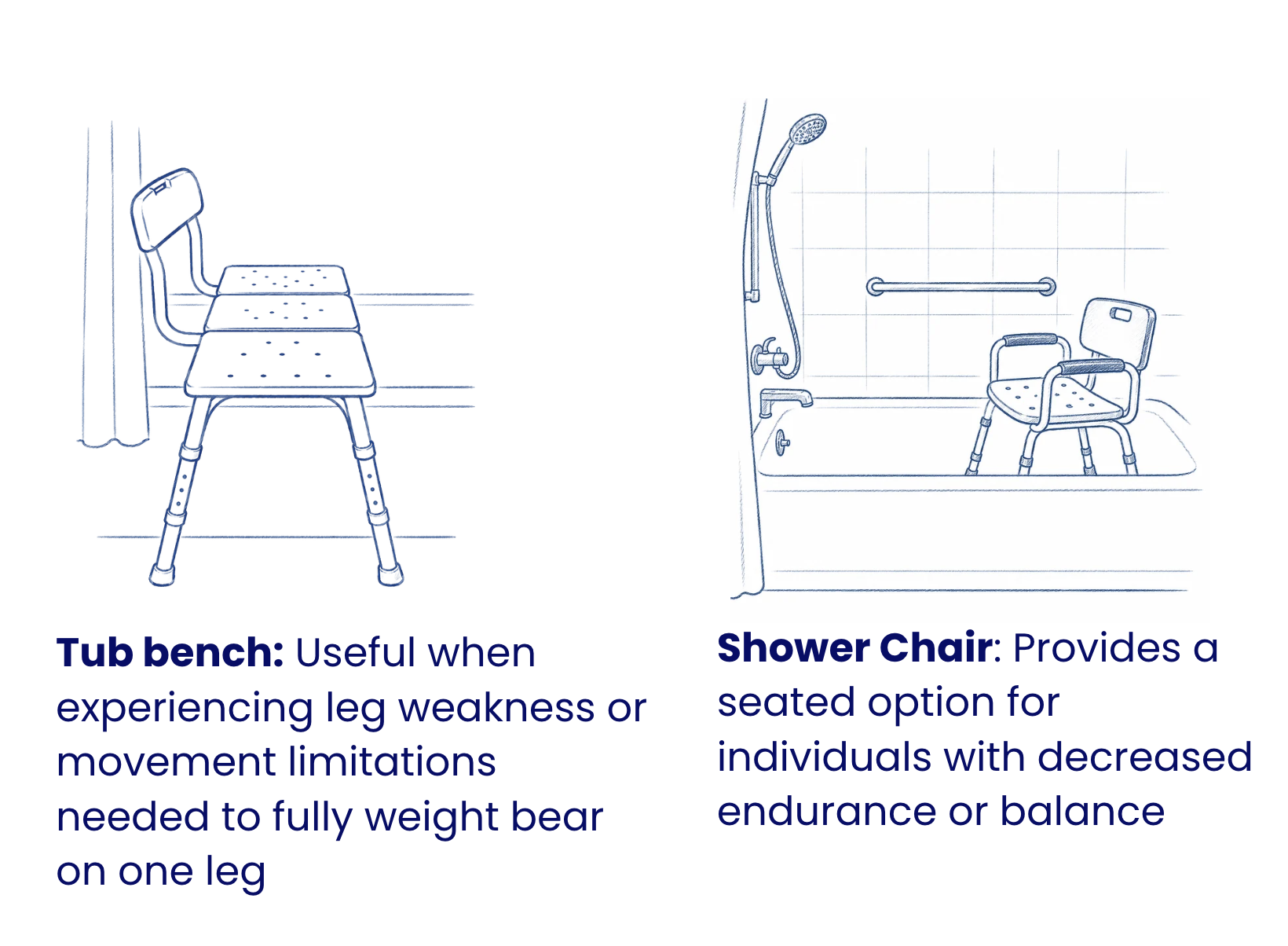
Tub Benches: Highly useful if you are experiencing leg weakness or movement limitations that make it difficult to fully weight-bear on one leg while stepping over the tub wall.
Shower Chairs: Provide a secure, seated option for individuals with decreased endurance, balance challenges, or fatigue.
TIP: If you can’t bear full weight on one leg because of weakness or post-surgical precautions, choose a tub with a tub bench over a shower stall. A tub bench lets you sit without stepping over a threshold, so you avoid placing weight on the weak leg. A shower chair in a stall usually still requires stepping over—even a low threshold—so it may not eliminate the weight-bearing demand.
3. Strategic Grab Bar Placement
Grab bars are a cornerstone of bathroom safety, but placement matters just as much as having them installed securely.
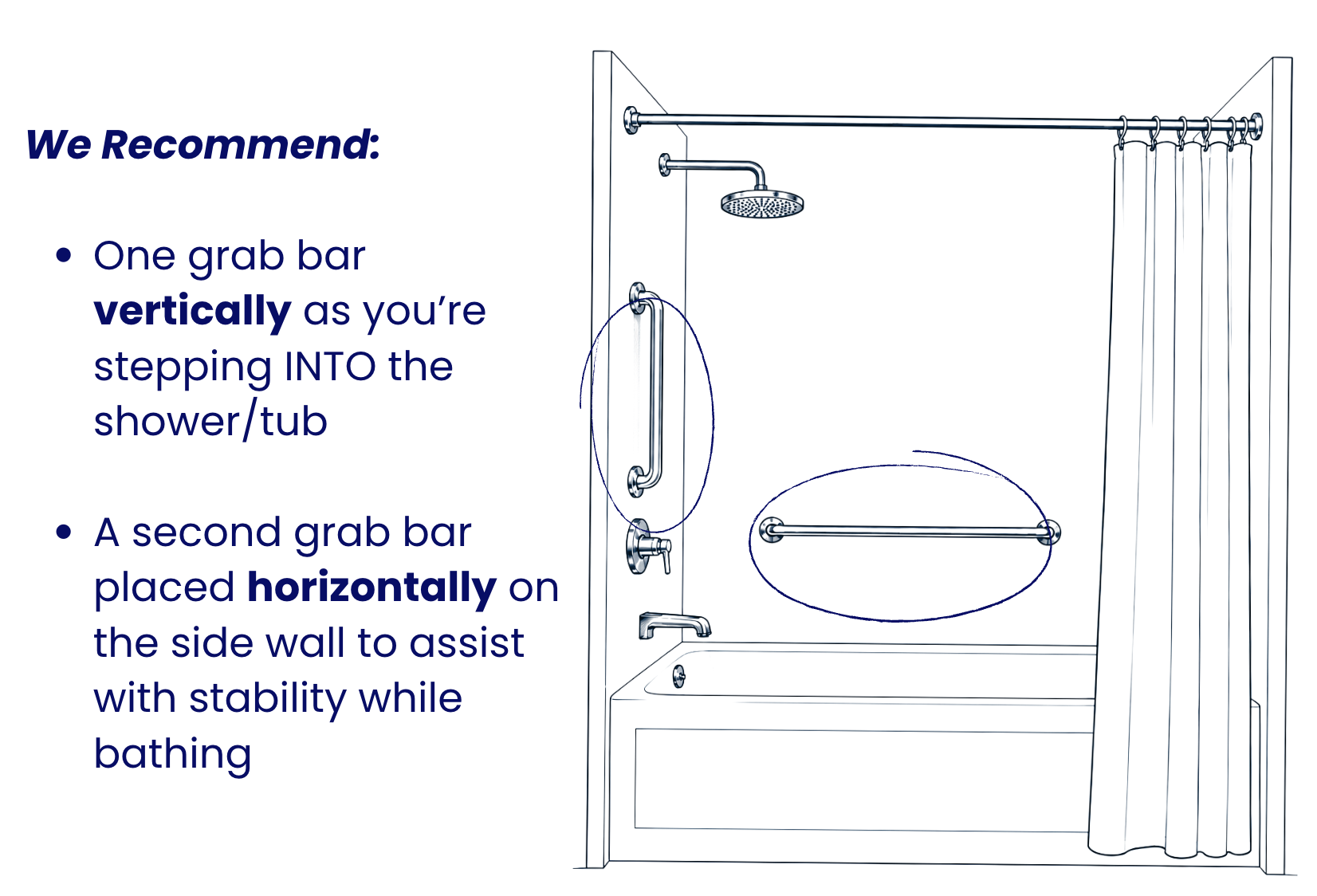
Vertical Entry Bar: We recommend placing one grab bar vertically where you are stepping into the shower or tub to give you steady hand support right at the threshold.
Horizontal Bath/Shower Bar: A second grab bar placed horizontally on the side wall assists with stability while bathing, washing, or transitioning up and down.
4. Master the Side-Stepping Technique
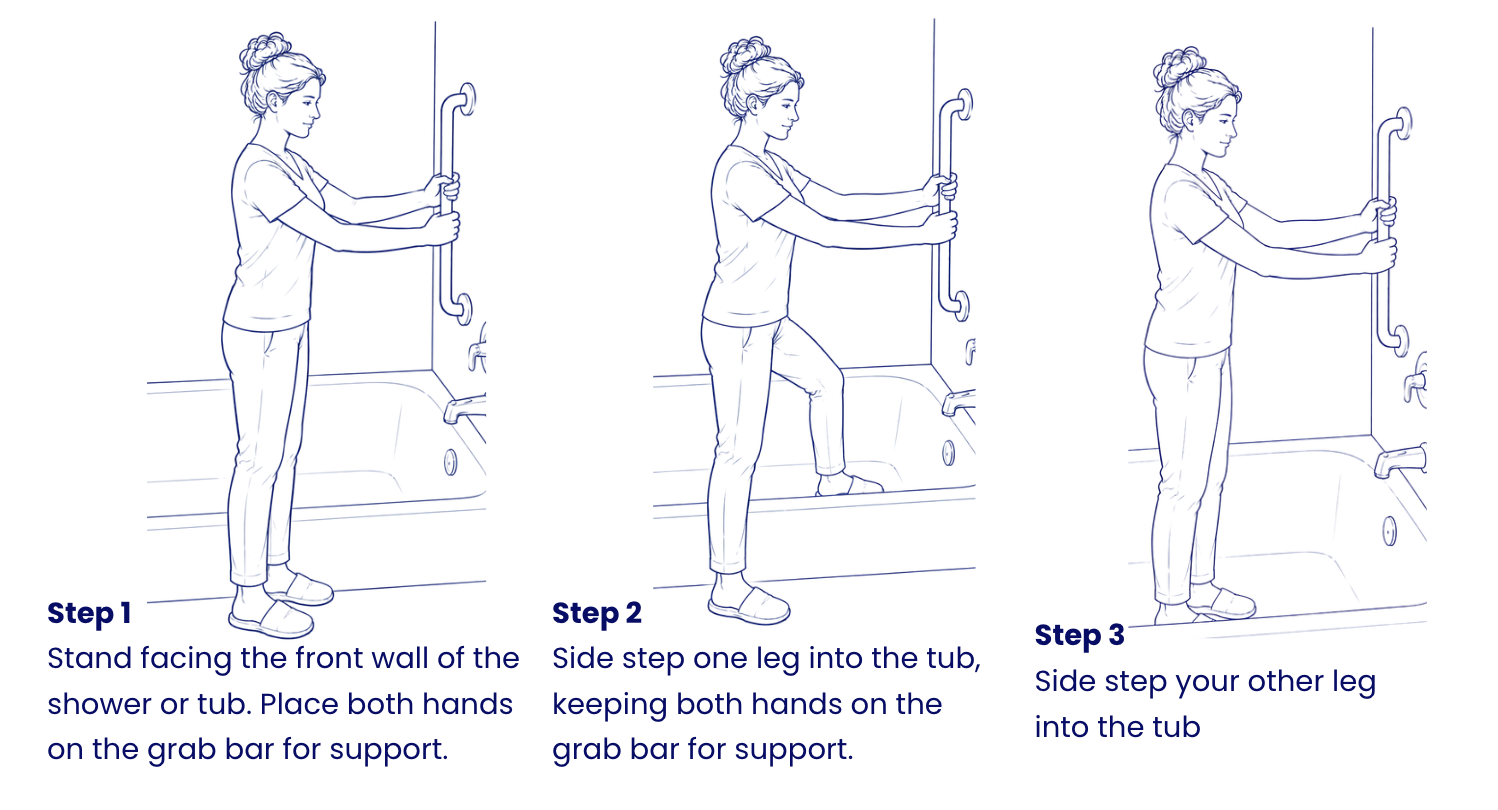
How you enter the tub matters! Instead of stepping straight forward, which can throw off your center of gravity, try a side-step technique.
Step 1: Stand facing the front wall of the shower or tub, placing both hands on your grab bar for solid support.
Step 2: Side-step one leg into the tub, keeping both hands firmly on the grab bar.
Step 3: Side-step your other leg into the tub to complete the transfer safely. Facing the wall gives you immediate, accessible support surfaces the entire time.
Looking for personalized recommendations or a tailored home safety assessment? Feel free to reach out or book a consultation to discuss your specific accessibility needs!
